
Landscape and nature photographers
How Photographers Can Use Sunrise, Sunset, and Moon Phases to Plan Outdoor Shoots
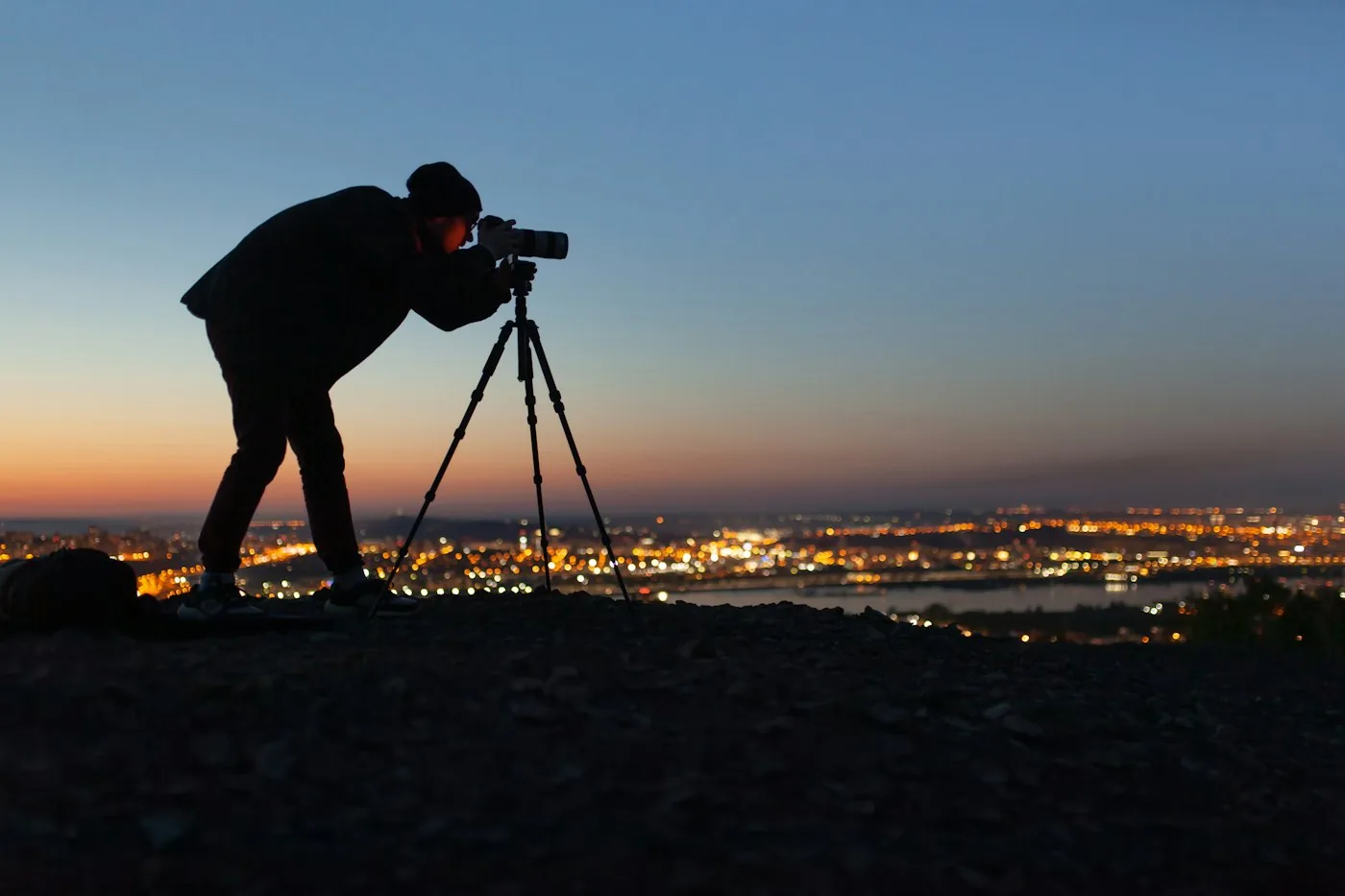
Short answer: plan outdoor shoots around three natural clocks — sunrise and sunset for warm, low-angle light, twilight for soft blue tones, and the moon's phase and rise time for moonlit or dark-sky work. Knowing when these line up at your location is most of the battle.
The light around sunrise and sunset
When the sun is low, its light travels through more atmosphere. Blue light scatters away and the remaining light is warmer and softer. Shadows stretch out, revealing texture in rock, sand, and terrain.
Photographers often call the period shortly after sunrise and before sunset the "golden hour". Its length depends on your latitude and the season: it's shorter near the equator and can last much longer at high latitudes in summer.
Practical tips
- Arrive early. For sunrise, be set up before the sun breaks the horizon — the sky often shows its best color before sunrise.
- Stay late. For sunset, don't pack up when the sun disappears. The sky can light up 10–20 minutes afterward.
- Check the horizon. Mountains to the east delay the first direct light; mountains to the west end it early.
Twilight: the quiet window
After sunset, the sky passes through civil, nautical, and astronomical twilight. Civil twilight — when the sun is up to 6° below the horizon — gives even, shadowless light and deep blue skies. It's ideal for cityscapes, where artificial lights balance with the sky.
Working with the moon
Moonrise and moonset
The moon's phase tells you when it's in the sky:
- Full moon: rises around sunset, sets around sunrise.
- First quarter: rises around noon, high at sunset.
- Last quarter: rises around midnight, visible in the morning.
On average, moonrise comes about 50 minutes later each day.
Scenario: a rising moon over a landscape
A full moon rising over a ridge is a classic shot. The challenge is balancing exposure between a bright moon and a darkening landscape.
The solution is timing. On the evening of the full moon — or the evening before — the moon rises close to sunset, while the land is still lit. Check the moonrise time and direction for your location, then pick a spot with an interesting foreground in that direction.
Scenario: dark skies and the Milky Way
For astrophotography, moonlight is the enemy. Plan around the new moon, when the sky is darkest. Check that astronomical twilight has ended and the moon won't rise during your session.
Scenario: moonlit landscapes
A bright gibbous or full moon can light a landscape like a dim sun, with real shadows. Long exposures can look almost like daylight, with stars overhead.
Seasonal planning
The sun's rising and setting points move along the horizon through the year. In the Northern Hemisphere, the sun rises farthest north of east near the June solstice and farthest south near the December solstice. A composition that works in summer may not line up in winter.
A shoot-planning checklist
- Sunrise or sunset time at the location
- Where the sun will rise or set on the horizon
- Twilight timing
- Moon phase, illumination, and rise/set times
- Weather and cloud forecast from an official source
- Access, parking, and permit rules
Seeing the light and the moon together
Solunex™ puts the solar and lunar rings on one dial, so you can see at a glance whether the moon rises before, during, or after the light goes. You can also check another city before you travel to a location.