
Everyday curious minds
What Is Natural Time? A Beginner's Guide to the Rhythms of the Sun, Moon, and Seasons
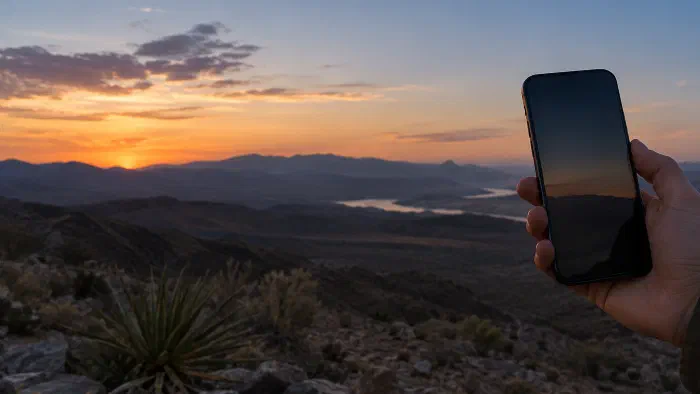
Short answer: natural time is time told by nature — where the sun is, what the moon is doing, and how far through the year we are — rather than by the clock alone. A clock says 7:00 AM. Natural time says an hour after sunrise, with the moon still up, on one of the shortest days of the year.
Clock time vs. natural time
The clock is one of humanity's great inventions. It lets millions of people agree on when the train leaves. To do that, it ignores the sky. Every hour is the same length, on every day, everywhere in a time zone.
Nature doesn't work that way:
- 7:00 AM in June can be well into daylight. 7:00 AM in December can still be dark.
- Two cities in the same time zone can see sunrise many minutes apart.
- Moonrise shifts by roughly 50 minutes a day on average, so the night sky changes from one evening to the next.
Natural time doesn't replace the clock. It adds the missing context.
The three natural rhythms
1. The solar day
The most familiar rhythm. Each day has a sunrise, a solar noon (when the sun is highest), and a sunset. The length of daylight changes through the year, and so does the sun's height at noon.
Because of time zones and daylight saving time, solar noon is rarely at 12:00 on the clock. In much of the U.S. during summer, it falls closer to 1:00 PM.
2. The lunar month
The moon takes about 29.5 days to go from new moon to new moon. Along the way it moves through its phases: crescent, first quarter, full, last quarter, and back. The phase determines how bright your night is and when the moon rises and sets.
For more, see our guide to understanding moon phases.
3. The seasonal year
Earth's tilted axis — about 23.4° — creates the seasons. It's the reason daylight grows and shrinks through the year, and why the sun sits higher in summer than in winter. Solstices and equinoxes mark the turning points.
Beyond the sky: your local conditions
Natural time also includes the conditions you're actually living in. Temperature typically bottoms out near sunrise and peaks in the afternoon. Air quality can change over the course of a day too. Seeing those patterns alongside the sun and moon gives you a fuller picture of the day.
Why it's worth noticing
You don't need to be an astronomer to benefit:
- Plan better — know how much light is left for a walk, a hike, or a photo.
- Notice more — see why evenings stretch out in spring and shrink in autumn.
- Learn something — the solar system is visible from your back door every day.
How Solunex™ shows natural time
Solunex™, made by Natural Time Systems™, draws your whole day as one dial. Natural cycles appear as rings around it:
- Solar ring — daylight and darkness, with sunrise, solar noon, and sunset.
- Lunar ring — where the moon is and its shape, with moonrise and moonset.
- Temperature ring — the shape of the day's warmth, hour by hour.
- Air quality ring — how clean the air is through the day.
- Year ring — where today sits in the year.
Instead of reading a list of numbers, you can see your day at a glance.